
Tuesday, 19 December 2017

Tuesday, 5 December 2017

Friday, 1 December 2017

Thursday, 30 November 2017
Representation on the front pages

- Being represented in the image is a teenager of a lower class: this is stereotypically shown due to him wearing a full adidas tracksuit with his hood up and a man bag (all typical connotations). The image is being constructed to be captured with the man in-front of a burning car to show violence and highlight the headline "ANARCHY". The text to match the image is shown to be surrounding the image so non of the main aspect of the image is covered and visibly shown. one of the main bullet points reading "215 arrests, PM jet back" relates to the image as the the 'chav' appeared to be shown in the image is who the audience would typically expect to be part of the "215 arrested". This is a typical themed headline for The Sun as they tend to over dramatise headlines to create gossip and reign in a large target audience; fitting with the conventions of a tabloid.

Being represented in this front page is a mother and a victim part of one of the most famous murders; the moors murders. The image with the headline is a counter typical image to represent a victim in a scenario due to the image of the mother appearing her to seem angry and aggressive looking instead of showing a pitiful image. This representation is being constructed by the media as they have shown to have focused more on the size of the headline using a quote said to attract an audience especially through the use of the word 'stab' to highlight how serious the situation is. The image to go with it is quite small and appears in the right top corner once again showing negative connotations to almost make the victim at first glance look like the suspect until you read into the article. The representation does fit in with usual insinuations of a tabloid such as The Sun who aim to dramatise and speculate anything to create a bold headline.

In this headline being represented is a Russian heiress and famous footballer John Terry: a stereotypical image of both involved is shown on the front cover with the heiress looking innocent and 'scared' whereas Terry is shown to look rough and have an almost dodgy way about him. The media shows two separate images on both that are not even shown next to each other to emphasis to the audience the heiress didn't want anything to do with him and shows her image to be much larger to create sympathy and put the attention on the reader to focus on her. The headline to go with this appears to be bold and very loud as it sums up what has happened in a few lines that instantly draws the readers attention making them want to find out how this happened. The representation once again fits in with a typical tabloid headline due to the connotations shown in order to draw in an audience which is what the Daily Mirror tends to do.
 This headline represents higher figures; in this case the newly elected president of the US Barak Obama. The image being presented in this headline doesn't really fit into the stereotypical or counter typical category as its a normal image of Obama holding a ballet looking happy; what you would expect to go with a headline such as this. The representation of the image is a portrait close up of Obama looking powerful and accomplished to present him as a serious man and someone the public can depend on to be the next president of the US. The representations headline reads "Its President Obama" announcing the winning of Obama, however underneath in smaller print it says "US elects first black president in mass vote". This shows the newspaper to instantly highlight the colour of Obamas skin as a key change in election history and to make a headline of it just to attract an audience. The representation on a whole of the newspaper is a stereotypical writing style to dramatise and pin point one little factor which is such a main point of argument in todays world to create a headline out of. This is something unusual for The Guardian to be talking about as they focus on the political side of story as a broadsheet, not on picking up on little aspects like usual gossip tabloids do.

Tuesday, 28 November 2017

Wednesday, 22 November 2017
Biasness within newspapers
1. Bias though pictures/graphics- camera angles/pictures

Obamas face shows negative connotations that something bad as happened (a mistake?)
2. Word choice and tone in the body of the text(mocking?)

Emphasis on the word 'King' highlights how important and looked upon he truly was by a nation.
3. Choice of journalist and source - who is writing it and what are their beliefs, who have they got their information from

There is no nasty mention when describing a cult leaders death; potentially showing the writer sympathised him.
4. Where is the article in the paper? Is it prominent or hidden? Front page or far back
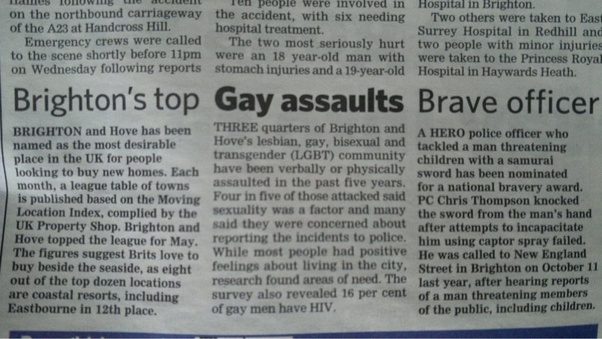
5. Bias through omission or selection- whether an article is published or not

This article received a lot of slam due to it being removed- people argued it never show have been taken down
6. Bias by headline

The headline is showing The Sun to be influencing people on what to vote for showing a bias opinion on Brexit
7. Bias by use of name and titles ('terrorists' or 'freedom-fighters'? 'ex con' or 'someone who served a sentence a long time ago')

Calling the mum a 'monster' emphasises and makes the reader feel instant hatred towards her before you even read deeper into the story.
8. Bias through statistics and crowd counts ( 'a hundred injured in aircrash' or 'only minor injuries in air crash')

The amount of casualties is included in the headline to highlight how catastrophic the terrorist attack is and uses the power of negativity to portray the story.
Thursday, 16 November 2017

Subscribe to:
Posts (Atom)